
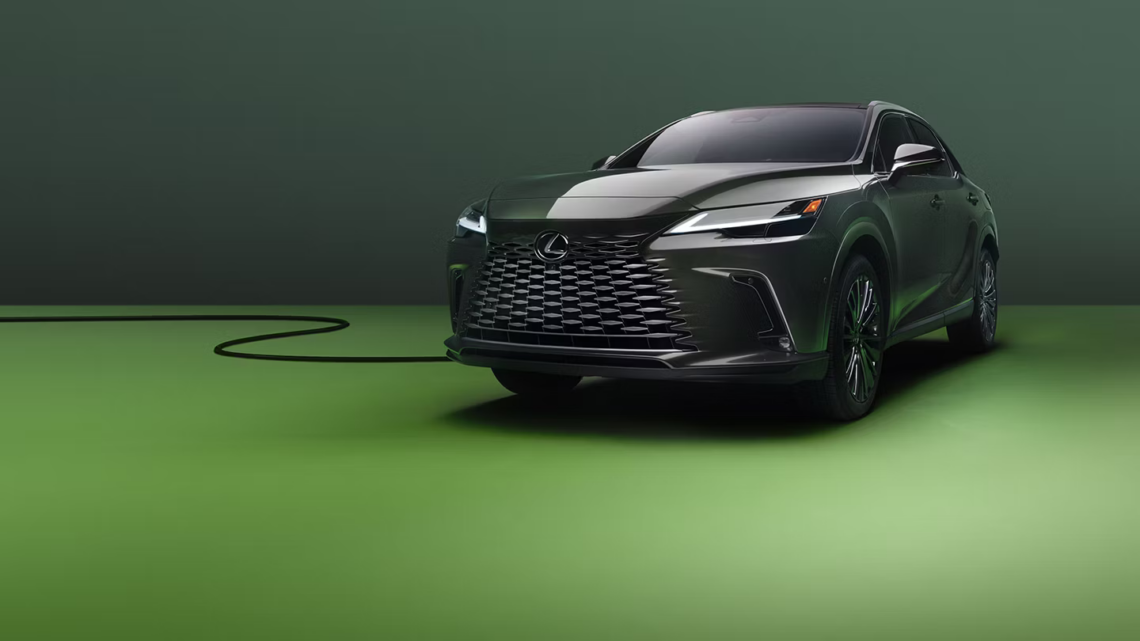
The 2026 Lexus RX Hybrid is a great choice for drivers who want a luxury SUV powered by a hybrid engine. You get more powertrain options with hybrid trims compared to Lexus RX PHEV trims, but those PHEV trims offer dedicated electric driving. Here are the key power and performance differences between these models, courtesy of Lexus of Jacksonville.
Hybrid Engines
Multiple hybrid powertrains are available with the 2026 Lexus RX Hybrid. On the Lexus RX 350h AWD, for example, the standard 2.5-liter inline-four hybrid engine delivers 246 horsepower and 233 lb-ft of torque. Or you can opt for the Lexus RX 500h F SPORT Performance AWD, which features a turbo engine capable of 366 horsepower and 406 lb-ft of torque.
PHEV Powertrains
The 2026 Lexus RX lineup also includes the RX 450h+ plug-in hybrid (PHEV) for drivers who want daily EV capability with gas backup. The RX 450h+ delivers a manufacturer-listed 304 horsepower from its 2.5-liter plug-in hybrid system, and it can drive for an EPA-estimated up to 38 miles on electricity alone before seamlessly switching back to gas power.
Similar Features
Some features come standard in both the 2026 Lexus RX Hybrid and PHEV trims. For example, all RX hybrid (350h, 500h) and PHEV (450h+) models include standard all-wheel drive, helping you maintain confident traction when roads turn slippery. You can also switch between multiple handling presets with standard Drive Mode Select, including Normal, ECO, Sport, and Custom modes.
Compare the 2026 Lexus RX Hybrid and PHEV in Jacksonville, FL
Our dealership can show you the ins and outs of both the 2026 Lexus RX Hybrid and comparable PHEV options. Visit Lexus of Jacksonville today to test-drive this model or learn more about a specific trim.
Projected EPA-estimated combined total driving range using EPA’s preliminary testing procedure standards for a fully charged vehicle operated under ideal driving conditions. Use for comparison purposes only. Actual range will vary and may decrease significantly depending on speed, outside temperature, accessory use, how/where you drive, charging habits, and other factors. Battery capacity also decreases with time and use, which will reduce range.